You are sitting in a restaurant in Chengdu or Shanghai. You scan the menu, spotting a safe-looking dish: Sautéed Green Beans. No meat visible. Just beans, garlic, and chilies. But if you have dealt with ordering vegetarian food china meat broth mishaps before, you know better than to relax. You order it, but you are already scanning the plate for warning signs.
Ten minutes later, you take a bite and realize the beans were stir-fried with minced pork. Or worse, you finish the meal thinking you stayed true to your diet, never knowing the sauce was made from concentrated chicken powder.
For anyone trying to stay 100% plant-based, these hidden ingredients are the final boss battle. It is not just about avoiding chunks of steak; it is about dodging the invisible animal products that kitchens use for "flavor."
In this post, I’m going to walk you through the hidden traps, from the universal offenders like rennet to the specific nightmares of Chinese dining like lard and chicken stock, and give you the exact scripts to survive.
The 'Trust Issues' of Vegetarianism
If you have been vegetarian for a while, you know the paranoia. You ask, "Is this vegetarian?" and the server says "Yes," because to them, vegetarian might just mean "no big pieces of meat."
In China, the concept of strict vegetarianism is often linked to Buddhism (佛教). Outside of that context, meat is often viewed as a seasoning rather than a main ingredient. A dish with "just a little bit" of pork for flavor is often considered a vegetable dish by local standards.
The High-Risk Zone: The Broth Bluff
This is the single biggest failure point. In Western cooking, vegetable stock is a pantry staple. In a standard Chinese kitchen? It barely exists.
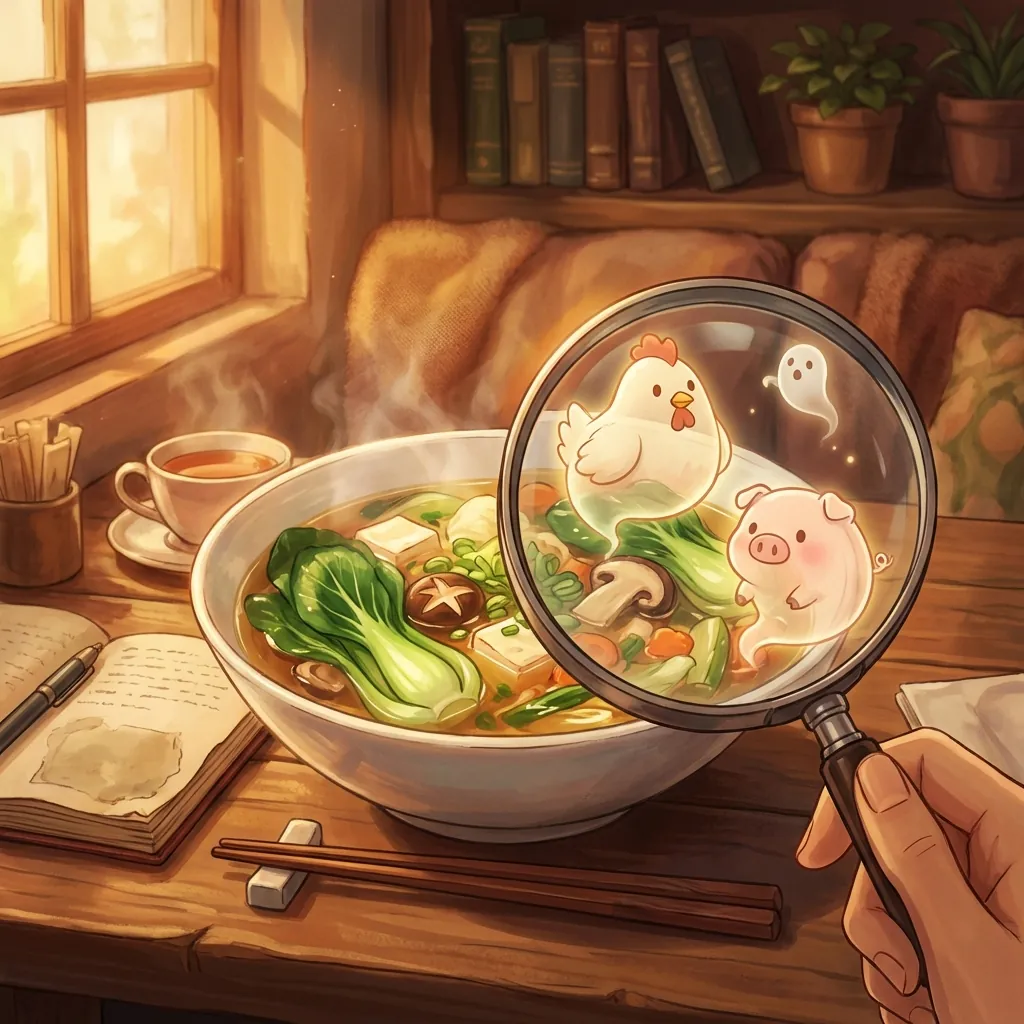
The 'Clear' Soup Trap
Most "light" soups in China are made with a base of:
- Pork Bone Broth (骨头汤)
- Chicken Broth (鸡汤)
Even if you order a "Spinach and Tofu Soup," the clear liquid surrounding it is likely animal-based.
The Chicken Powder Factor
Meet your nemesis: Chicken Essence (鸡精).
It is like MSG's non-vegetarian cousin. It is granulated chicken stock, and it is used in everything, including stir-fries, marinades, and sauces. If you ask a chef to remove the meat, they might still toss a spoon of 鸡精 in because, to them, that is just "salt with flavor."
| Simplified | Traditional | Pinyin | Meaning | Note |
|---|---|---|---|---|
| 鸡精 | 雞精 | jījīng | Chicken essence/powder | The invisible enemy in stir-fries. |
| 高汤 | 高湯 | gāotāng | High/rich stock | Usually implies pork/chicken base. |
| 猪油 | 豬油 | zhūyóu | Lard | Often used for frying veggies for aroma. |
The Western Traps: Cheese & Gels
While you are navigating the noodle shops, you might occasionally crave a pizza or a sweet treat. Do not let your guard down just because you stepped into a Western-style cafe.
The Rennet Trap
Hard cheeses like Parmesan, Grana Padano, and Gorgonzola are traditionally made using Rennet.
Rennet is an enzyme complex produced in the stomachs of ruminant mammals (usually calves). It is what coagulates the milk. If the menu says "Authentic Italian Parmesan," it is technically not vegetarian. Many modern cheeses use microbial rennet (vegetarian), but unless the package specifies "Vegetarian," you are gambling.
The Sweet Deception
- Gelatin: You know this one. Gelatin is boiled skin, tendons, and ligaments. It hides in gummy candies, marshmallows, and sometimes even yogurts as a thickener.
- Cochineal: Ever wonder where that natural red food dye (E120) comes from? It’s Cochineal, which is made from crushed parasitic beetles. It is "natural," sure, but it definitely isn't plant-based.
- Bone Char: Refined white sugar is often filtered through Bone Char (charred animal bones) to achieve that pristine white color. This is harder to track, but organic sugar is usually a safer bet.
Dining Out: Social Scripts & Strategy
When you are hungry and standing in front of a waiter, you need clear, unambiguous language. Vague requests like "I don't eat meat" often fail because the definition of "meat" varies.
Here is how to lock it down.
Level 1: The Basic Refusal
- You: "I don't eat meat. Please don't put any meat."
- 我不吃肉,请不要放肉。
Level 2: The Specifics (The Survival Script)
This is where you catch the lard and chicken powder. You need to sound a bit fussy.
-
You: "Does this dish use lard or vegetable oil?"
- 这个菜是用猪油还是植物油?
-
You: "I don't eat chicken essence or broth. Can you use water instead of stock?"
- 我不吃鸡精和高汤。可以用清水煮吗?
Pro Tip: If you want to be 100% safe, tell them you eat "Buddhist Vegetarian" food. This conveys a strict religious restriction which is usually respected more than a dietary preference.
- You: "I eat Buddhist vegetarian food. No meat, no lard, no chicken powder."
- 我吃全素/佛素。不要肉,不要猪油,不要鸡精。
For more on navigating restaurant interactions, check out my guide on how to call the waiter politely so you start the conversation on the right foot.
Label Decoder: The Secret Codes
If you are buying packaged snacks at the convenience store, turn that package over. If you can't read the characters yet, look for these E-numbers. They act as a universal warning system regardless of the language.
- E120: Cochineal (Beetles)
- E441: Gelatin (Animal collagen)
- E542: Bone Phosphate (Animal bones)
- E901: Beeswax (Not vegan, but vegetarian)
- E904: Shellac (Insect secretion)
Also, beware of vague terms like "Natural Flavors." In rare cases, this can hide things like Castoreum (beaver anal secretions used for vanilla/raspberry flavor), though this is becoming less common due to cost.
Quick Takeaways
If you want to survive without accidentally consuming pork broth:
- Assume the broth is meat. Unless you are in a dedicated vegetarian restaurant, the "vegetable soup" has a chicken or pork base.
- Lard is love (for them). Leafy greens are often stir-fried in lard for aroma. Ask specifically for 植物油 (vegetable oil).
- Use the Religious Card. Saying you eat 全素 (complete vegetarian) carries more weight than just saying you don't want meat.
- Watch the Tofu. Mapo Tofu almost always has minced beef or pork. Home-style Tofu (家常豆腐) is often fried in meat fat.
If you're worried about severe reactions rather than just dietary preferences, you might want to look at making an allergy flashcard. It's safer to be annoying than to be sick.