Dining in China is usually the highlight of the trip, but if your throat closes up at the scent of a peanut, it is terrifying. Relying on a quick Google Translate or a mumbled sentence is a bad strategy.
Chinese cuisine relies heavily on oils, sauces, and garnishes that are often invisible in the final dish. Even if you order a dish that looks safe, the wok might have just been used to fry cashew chicken.
You need a strategy that bypasses language barriers and politeness. You need a "Don't Die" card.
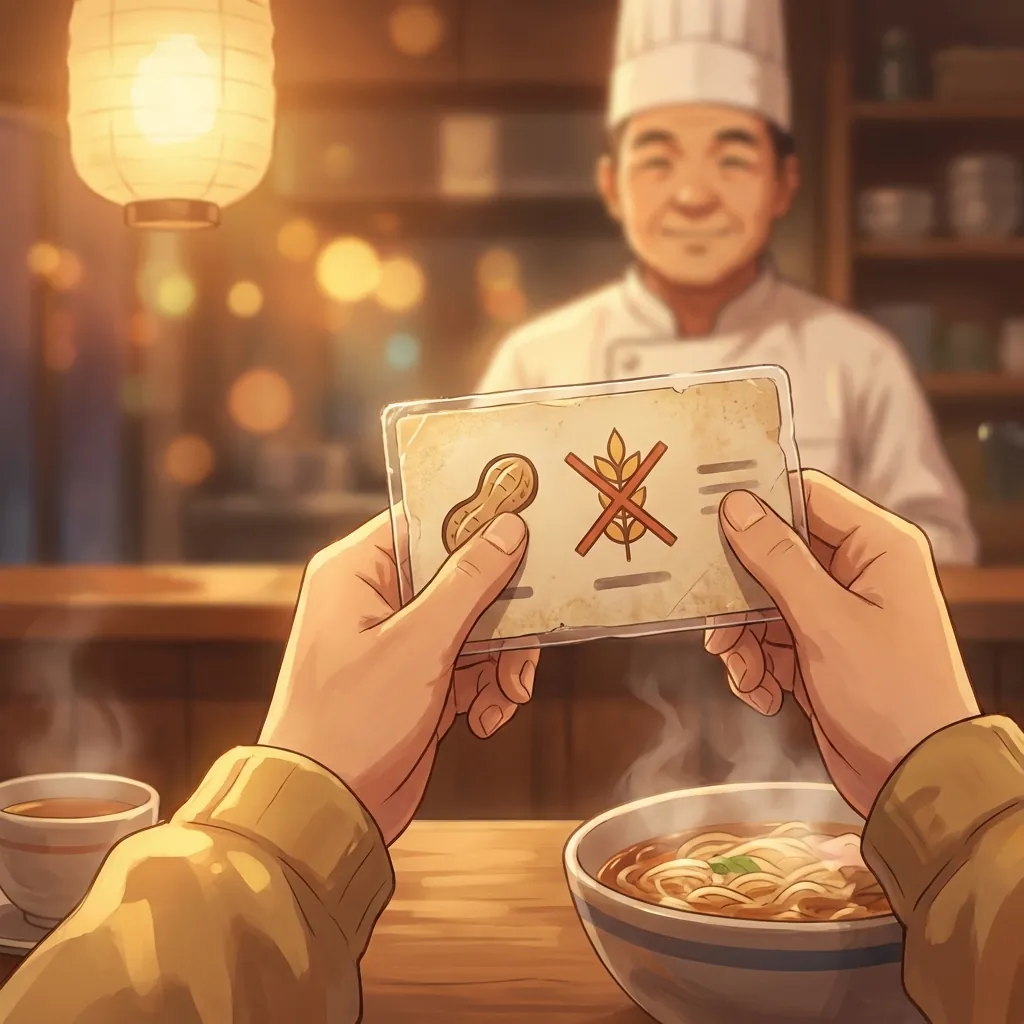
The Anatomy of the Card
A good allergy card is not a polite request. It is a warning label. It needs to be red, bold, and explicit. Don't worry about being rude; worry about breathing.
The Core Grammar: A vs B
The basic structure to state an allergy is:
Subject + 对 (duì) + [Allergen] + 过敏 (guò mǐn)
对 (duì) here acts as a preposition meaning "towards," and 过敏 (guò mǐn) means allergy.
我对花生过敏。(Wǒ duì huāshēng guòmǐn.) I am allergic to peanuts.
This is good for mild allergies. If you have a severe reaction, you need to escalate the language immediately.
The "I Will Die" Section
Chefs are busy. If they see "allergy," they might think you just get a rash. You need to tell them the consequences.
Add this phrase to your card:
如果我吃了这个,我会死。(Rúguǒ wǒ chīle zhège, wǒ huì sǐ.) If I eat this, I will die.
Is it dramatic? Yes. Is it necessary? Absolutely. You can also use the slightly more formal phrase for "life-threatening":
这有生命危险。(Zhè yǒu shēngmìng wēixiǎn.) This is life-threatening.
Common Allergens Vocabulary
Make sure you are using the correct word. Here is a breakdown of the usual suspects.
| Simplified | Traditional | Pinyin | Meaning | Note |
|---|---|---|---|---|
| 花生 | 花生 | huā shēng | Peanut | Distinct from tree nuts |
| 坚果 | 堅果 | jiān guǒ | Tree nuts | General term |
| 海鲜 | 海鮮 | hǎi xiān | Seafood | Includes fish and shellfish |
| 虾 | 蝦 | xiā | Shrimp | Very common in dumplings |
| 麦麸 | 麥麩 | mài fū | Gluten | "Mianjin" (面筋) is specifically wheat gluten |
| 鸡蛋 | 雞蛋 | jī dàn | Egg | Often used in fried rice/noodles |
| 乳制品 | 乳製品 | rǔ zhì pǐn | Dairy | Less common in traditional dishes |
If you have a basic grasp of Pinyin, it helps to say these, but keep the card visible.
The Cross-Contamination Warning
This is where most travelers get into trouble. You order a stir-fry with no nuts, but the oil was recycled, or the ladle wasn't washed.
Include a section specifically for the chef about the cooking process:
请不要用煮过[X]的油。(Qǐng búyào yòng zhǔguò [X] de yóu.) Please do not use oil that has cooked [X].
请把锅洗干净。(Qǐng bǎ guō xǐ gānjìng.) Please wash the wok clean.
It is acceptable to be this direct. When it comes to health, clarity beats etiquette. You aren't just calling the waiter to ask for water; you are managing a medical condition.
The Missing Link: Emergency Protocols
Most cards stop at prevention. But what if prevention fails? If you are traveling solo, or if your companions don't speak Chinese, you need a protocol for bystanders.
On the back of your laminated card (or the second slide on your phone), write instructions for what to do if you are incapacitated.
Emergency Numbers
- Mainland China: Ambulance is 120. Police is 110.
- Taiwan: Ambulance/Fire is 119. Police is 110.
The "Help Me" Script
Write this in huge Chinese characters for a bystander to read:
请帮我打 120 叫救护车!(Qǐng bāng wǒ dǎ yāo-èr-líng jiào jiùhùchē!) Please help me call 120 for an ambulance!
If you carry an EpiPen, include instructions on where it is:
我有肾上腺素笔在包里。(Wǒ yǒu shènshàngxiàn sù bǐ zài bāolǐ.) I have an adrenaline pen (EpiPen) in my bag.
Digital vs. Analog
I love technology, but batteries die. In China, you do almost everything with your phone, but for this, I recommend the Redundancy Strategy.
- The Digital Card: Save it as a generic photo in your "Favorites" album so you can access it offline without digging through WeChat mini-programs.
- The Physical Card: Laminated. Credit card size. Keep it in your wallet or lanyard. If you pass out, this is what people might find.
Summary Checklist
Before you board the plane:
- Identify your specific allergens in Simplified (Mainland) or Traditional (Taiwan/HK) characters.
- Draft the card with the "Death" clause included.
- Add the 120 (or 119) emergency instruction on the back.
- Print two copies.
Food in China is amazing. With the right preparation, you can enjoy it without fear.