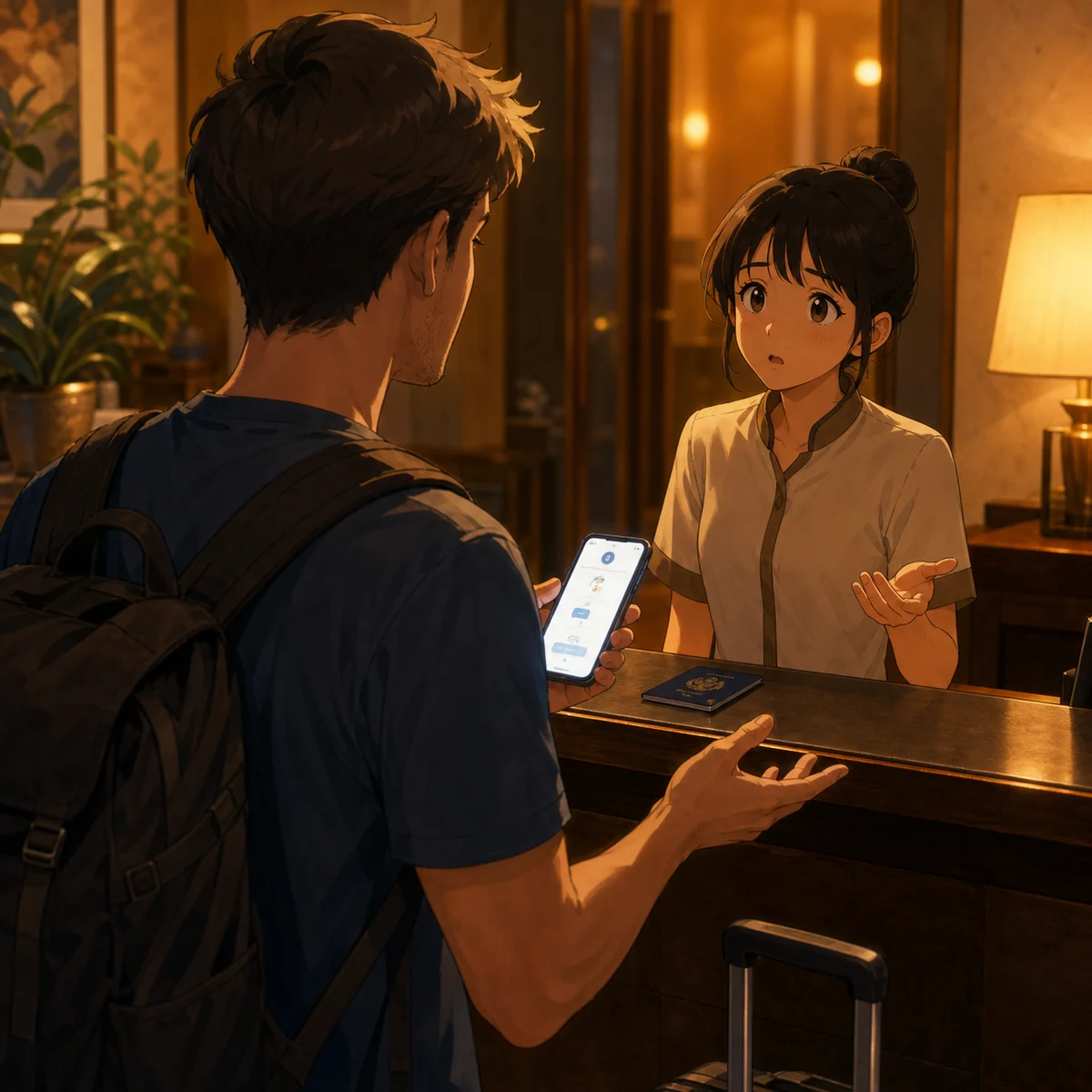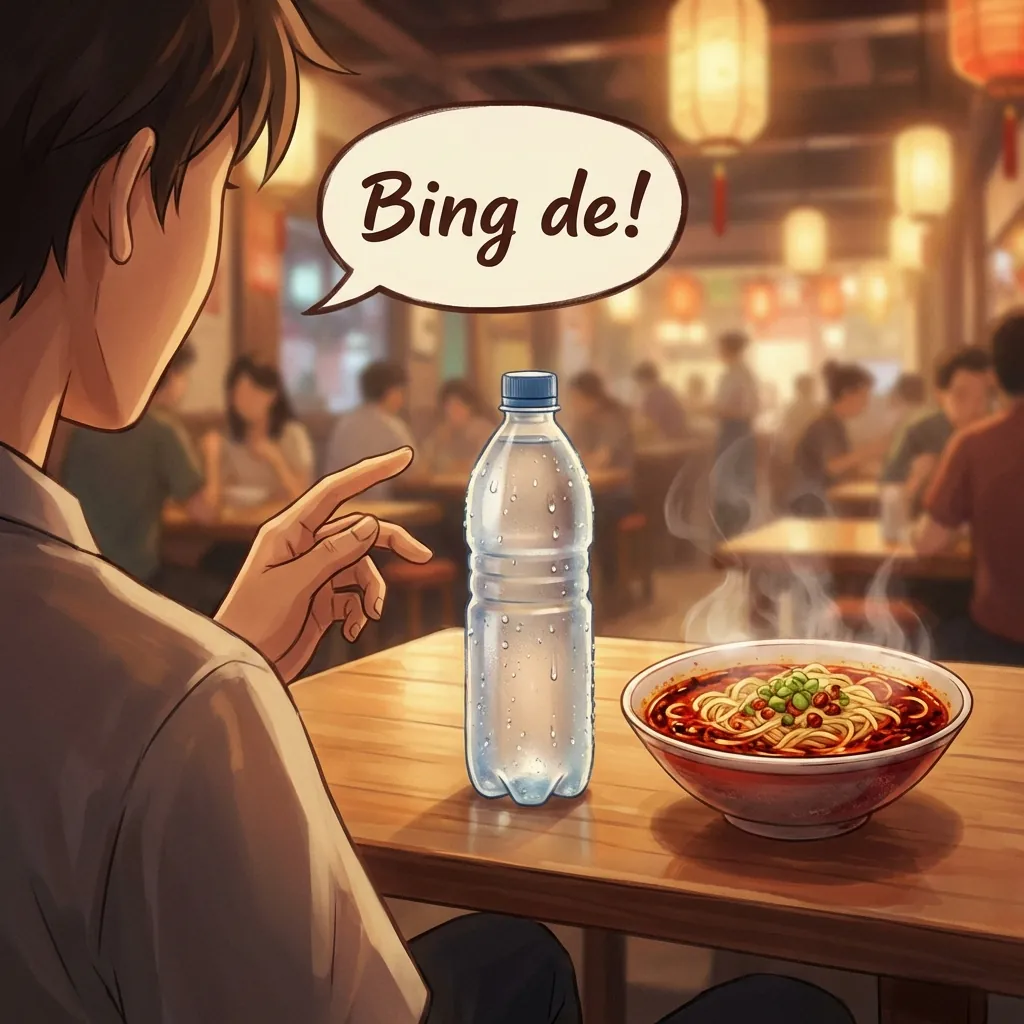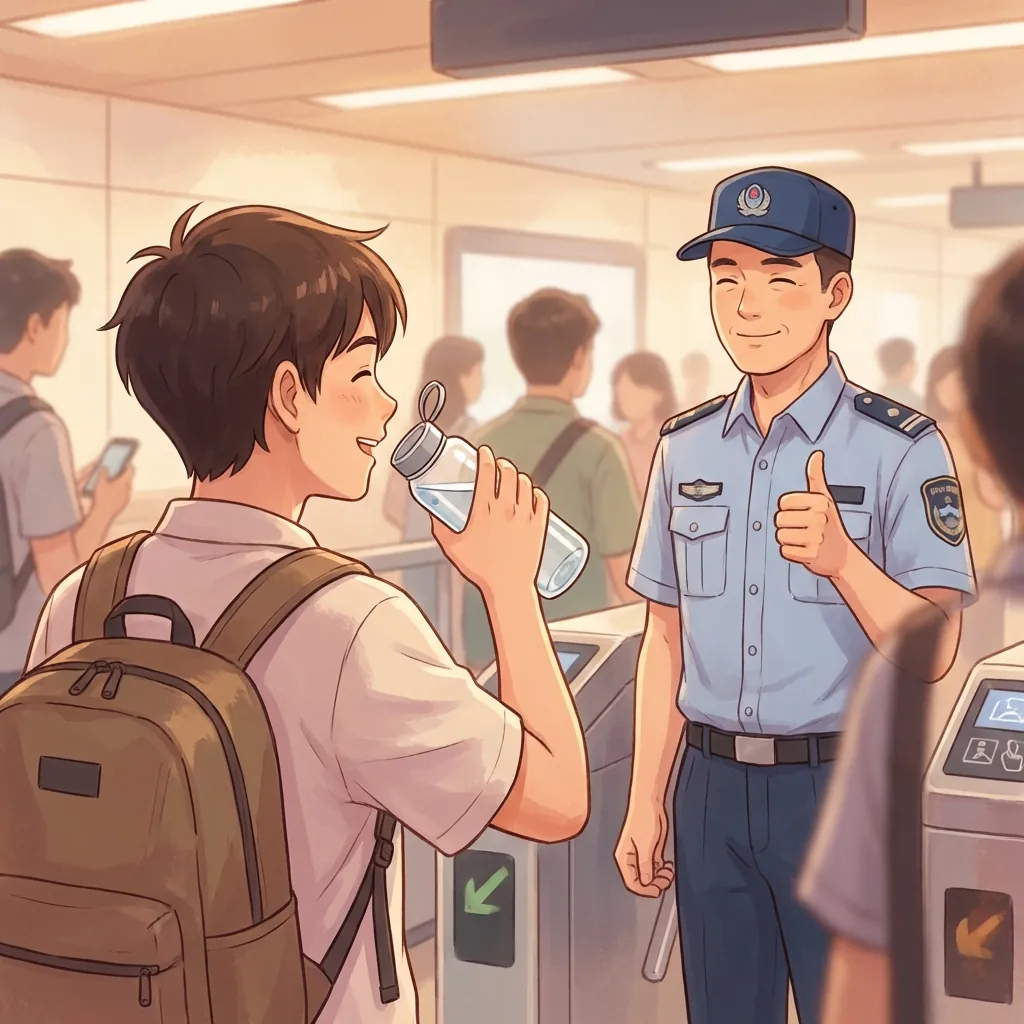
You are standing at the turnstile, bag on your shoulder, clutching a freshly bought bottle of iced tea. You see the X-ray machine ahead and hesitate, wondering if the china subway security liquid check means you have to chug the whole thing or throw it away.
If you have traveled by air recently, you are conditioned to fear liquids. But the subway in China is a different beast entirely. It is not about volume limits (the 100ml rule does not apply here). It is about substance.
In China, the question isn't "is this bottle too big?" The question is: "Is this actually water, or is it a bucket of gasoline?"
Here is how to navigate the security checkpoint without losing your drink or your patience.
The Airport Myth vs. Subway Reality
First, take a deep breath. You do not need to toss your expensive bubble tea into the trash bin.
Most existing travel guides conflate TSA regulations with local transit rules. This causes unnecessary panic. On the subway in mainland China (and many Asian metropolises), you can bring liquids. You can bring a 2-liter bottle of Coke if you want. There is no 100ml restriction.
The hurdle is not the size of the container. It is the checking process itself.
The "Sip Test": Mainland China's Unique Rule
If you are in Beijing, Shanghai, Shenzhen, or Guangzhou, you will encounter the famous "Sip Test."
Because security scanners cannot easily distinguish between water and combustible liquids (like pure alcohol or gasoline), the security guards rely on the most sophisticated testing device available: You.
When you put your bag through the X-ray, if they see a bottle, or if you are holding one in your hand, the guard will point to it and say:
喝一口Pinyin: Hē yī kǒu Meaning: Take a sip.
They are not thirsty. They want you to drink it to prove it is safe for human consumption. If you survive the sip, the liquid is deemed safe, and you are allowed to enter.
Practical Tips for the Sip Test
- Keep it accessible: Do not bury your water bottle at the bottom of your backpack. You will hold up the line digging it out. Keep it in the side pocket or your hand.
- Hot water: If you are carrying a thermos of boiling hot water (a very Chinese habit), explain carefully or open the lid to let the steam show. Usually, seeing the steam is enough, but they might still ask you to sip. Be careful not to burn yourself just to please the guard.
- Open containers: If you bought a coffee with a loose lid, hold it separate from your bag. Do not put it on the conveyor belt where it will tip over. Hand it to the guard over the machine; they will usually just nod or ask for a sip.
Regional Nuances: The "Dry" Zones
While we are focusing on China, it is vital to know that the rules change drastically if you hop a flight to neighboring regions.
Taipei & Singapore: The "No Consumption" Zone
In mainland China, the focus is on security entry. Once you are inside, no one really cares if you drink water. In Taipei and Singapore, the focus is on cleanliness and order.
- The Rule: You can carry water in your bag, but you absolutely cannot drink it once you cross the yellow line (the "Paid Area").
- The Consequence: Fines are real. In Taipei, you will see signs warning of fines up to NT$7,500. In Singapore, it's up to S$500.
- The Logic: They don't check your liquid for gasoline at the entry. They just don't want you spilling sticky juice on their pristine floors.
So, if you are visiting Taiwan after your Mainland trip, switch modes. Do not take that casual sip on the platform.
Essential Vocabulary for Subway Security
When you are at the checkpoint, these are the words you will hear.
| Simplified | Traditional | Pinyin | Meaning | Note |
|---|---|---|---|---|
| 液体 | 液體 | yè tǐ | Liquid | Usually used in official announcements. |
| 试喝 | 試喝 | shì hē | Test drink | The act of tasting your drink for security. |
| 违禁品 | 違禁品 | wéi jìn pǐn | Prohibited items | Look for this on signage. |
| 检查 | 檢查 | jiǎn chá | To check / Inspect | "An jian" (Safety check) is common too. |
| 没收 | 沒收 | mò shōu | To confiscate | What happens to your Swiss Army knife. |
Dialogue: At the Scanner
Here is a typical interaction you might have at a Beijing subway station entrance.
- Guard: 包过一下,手里饮料喝一口。 (Put the bag through [the scanner], take a sip of the drink in your hand.)
- You: 好的。 (Okay.) (You take a small sip)
- Guard: 好了,进去吧。 (Okay, go on in.)
Sometimes, they might use a special handheld scanner for bottles instead of asking you to drink. This is becoming more common in newer stations or during high-traffic times (like National Day). They simply touch the bottle with the device to check for volatile compounds.
Can I Bring Alcohol?
This is tricky. Generally, high-proof Baijiu or open containers of alcohol might be flagged as flammable (combustible). Beer or wine in sealed containers is usually fine in small quantities, but rules vary city by city.
If you are carrying a loose bottle of craft beer you opened at dinner, finish it before you enter. Do not try to argue logic with a scanner that beeps at liquids.
Summary Checklist
To survive the china subway security liquid check without stress:
- Don't panic: You can bring your water.
- Be ready to sip: Have the bottle ready in your hand.
- Know your region: Sip freely in Shanghai; keep the cap screwed tight in Taipei.
- Don't block the flow: If you have too many bags or confusing items, step aside so the commuter rush doesn't crush you.
Next time a guard points at your water bottle, just smile, toast to their hard work, and take a drink. It's the easiest test you'll take in China.