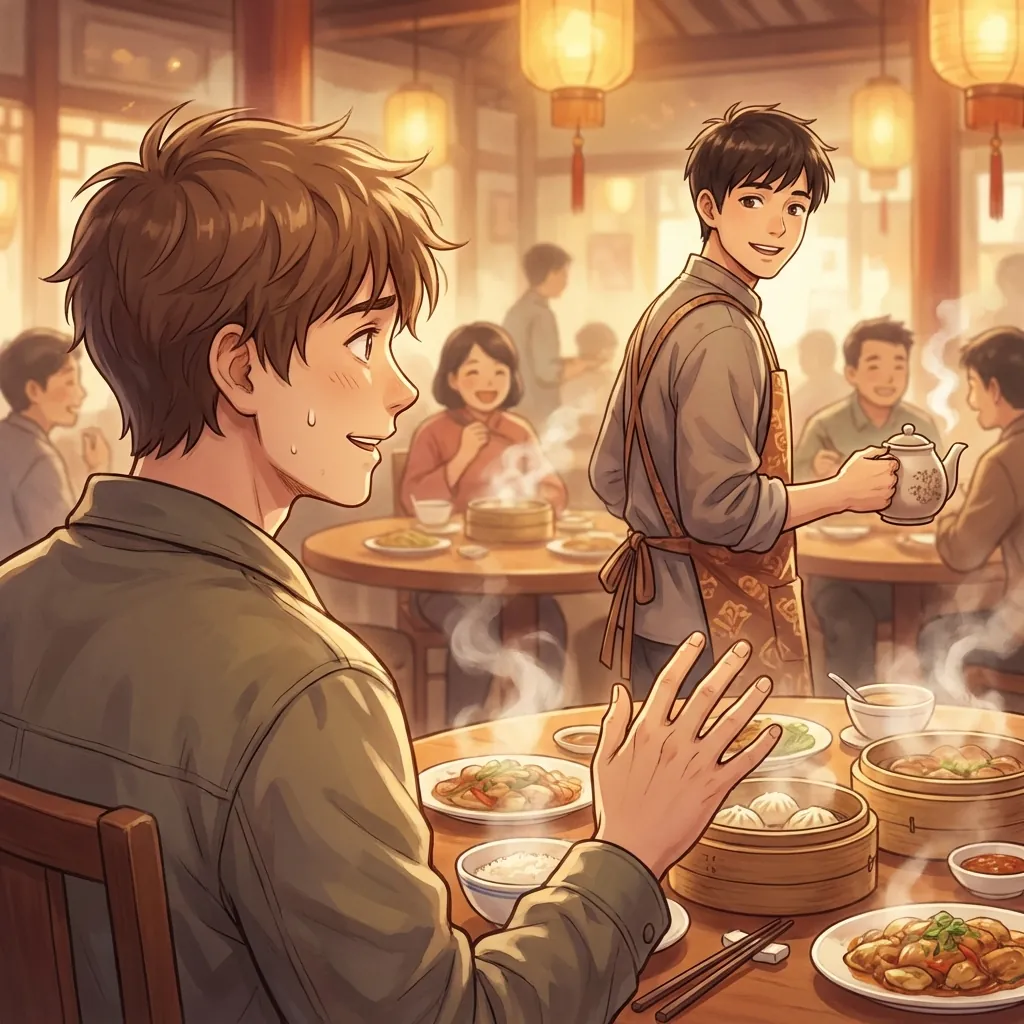
You are sitting in a crowded hot pot spot in Chengdu. You need more water, but you are stuck figuring out how to call a waiter in China polite-ly. You raise your hand and shout the word your textbook taught you on day one: Fúwùyuán!
The restaurant goes quiet. The waiter walks over, slightly stiff. You got the water, but you also got the feeling you just shouted "Service Staff Member!" in a room full of friends.
Here is the reality of dining etiquette in 2026: strict titles are out, and "transactional warmth" is in. While Fuwuyuan 服务员 is grammatically correct, using it today feels increasingly bureaucratic.
If you want to blend in and get faster service, you need to update your vocabulary.
The 'Fuwuyuan' Dilemma
For decades, Fúwùyuán was the gold standard. It literally translates to "service person." It is neutral, descriptive, and safe.
However, in modern Chinese dining culture, especially in casual eateries, it creates a hierarchy gap. It emphasizes that I am eating and you are serving. Chinese social dynamics heavily favor relationships (Guanxi), even temporary ones. By using a stiff title, you are rejecting that temporary relationship.
Does this mean you can't use it? No. If you are at a high-end hotel restaurant or a very formal banquet, Fúwùyuán remains appropriate. But for 90% of your meals, there is a better way.
The Modern Alternatives: Warmth vs. Formality
To sound like a local, you need to navigate the "Flattery Economy."
Shuàigē (帅哥) & Měinǚ (美女): The Flattery Strategy
Walk into any noodle shop in Shanghai, and you will hear these words shouted across the room.
- Shuàigē (Handsome Guy) = Male server
- Měinǚ (Beautiful Girl) = Female server
This is not flirting. Do not confuse this with hitting on the staff. In this context, calling someone Shuaige 帅哥 or Meinu 美女 is simply a polite fiction. It acknowledges them as a peer rather than a servant.
Customer: 美女,加点水! Pinyin: Měinǚ, jiā diǎn shuǐ! Meaning: Beautiful girl, add some water!
The Risk Factor: There is a subtle "creepiness" line here. If you are significantly older than the server, or if your tone is too slow and suggestive, it gets weird. The key is speed and volume. Say it loudly, briskly, and immediately follow it with your request.
Lǎobǎn (老板): Respect for the 'Boss'
If you are eating street food, visiting a small mom-and-pop shop, or buying fruit, skip the flattery and go for status. Call the person Laoban 老板.
It doesn't matter if they actually own the place.
- If they are the owner, you gave them proper respect.
- If they are not the owner, you just complimented their competence.
For female bosses, you can use 老板娘 (Lǎobǎnniáng), though Lǎobǎn is becoming increasingly gender-neutral in busy situations.
Nǐhǎo (你好) + Hand Wave: The Universal Safe Bet
If the idea of shouting "Handsome Guy" at a stranger gives you hives, or if you aren't sure about the age gap, default to the universal greeting.
Raise your hand (palm down or standard wave, never one finger) and say:
You: 你好! Pinyin: Nǐhǎo! Meaning: Hello!
This works 100% of the time. It is polite, gets attention, and carries zero cultural baggage.
Danger Zone: Terms to Avoid
Why 'Xiǎojiě' is a Trap
If you learned Chinese from an old textbook or lived in Taiwan previously, you might be tempted to use Xiaojie 小姐 for a waitress.
Do not do this in Mainland China.
In the Mainland, Xiǎojiě evolved a specific slang meaning referring to sex workers (roughly equivalent to "Miss" used in a very shady context). While it is slowly being reclaimed in corporate settings, shouting it in a restaurant can still cause offense or awkward giggles.
We have a full breakdown on this nuance here: Why You Shouldn't Call the Waitress Xiaojie.
The 'Hey You' Vibe
Some learners try to get attention by shouting 哎! (Āi!) or just 那个! (Nèige! - "That one/Um").
This is rude. It sounds like you are summoning a dog. Always attach a noun or a greeting.
Regional & Contextual Nuances
Mainland vs. Taiwan
If you cross the strait to Taiwan, the rules flip back.
- Taiwan: Xiǎojiě is perfectly polite and standard for "Miss/Waitress." Shuàigē/Měinǚ is used, but often ironically or in very casual markets (like night markets).
- Mainland: Xiǎojiě is risky. Shuàigē/Měinǚ is standard casual.
Volume Control
China is a high-context, high-volume dining culture. In a crowded restaurant, you must shout to be heard. It is not considered impolite to raise your voice to summon staff. If you wait for eye contact, you will starve.
The Silent Service Revolution
Before you stress too much about vocabulary, look at the corner of your table.
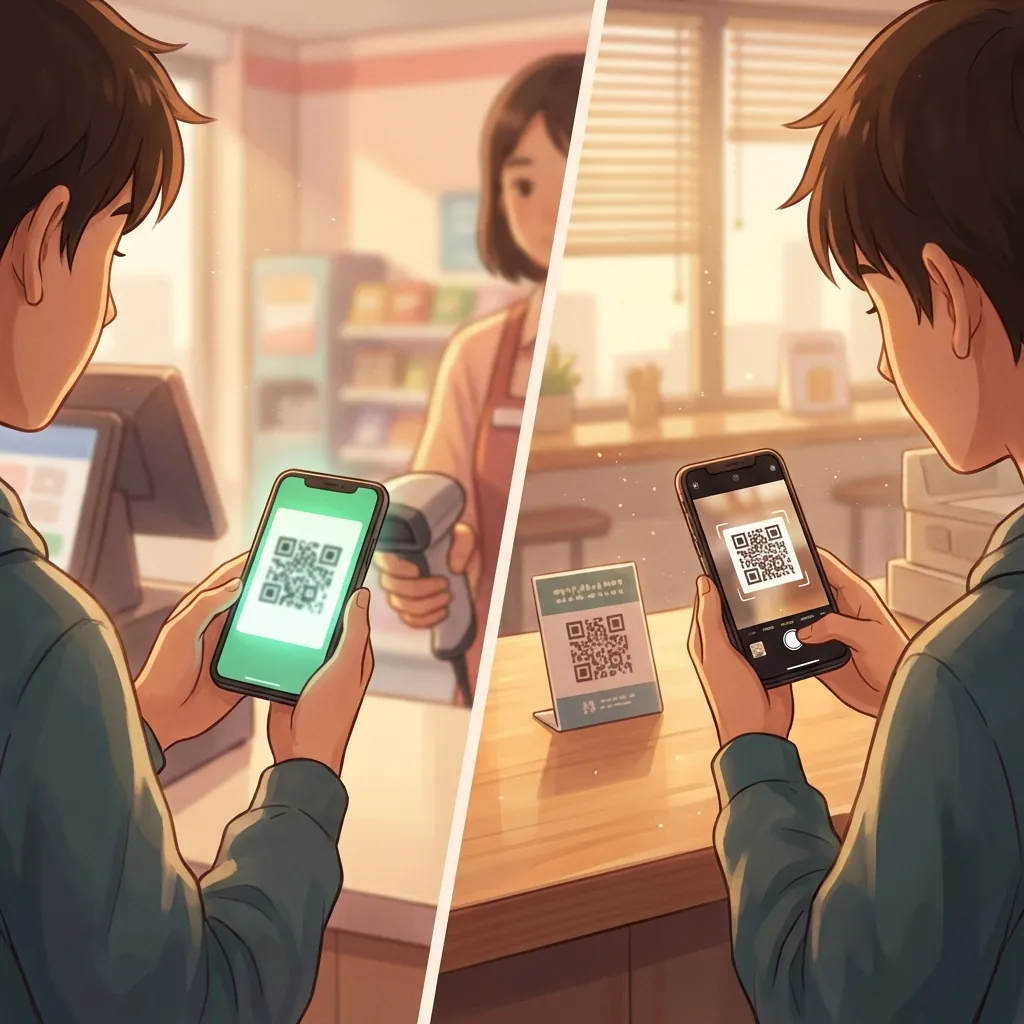
In 2026, many interactions have been replaced by the QR Code (Sǎo Mǎ). You scan, order, and pay on WeChat or Alipay without ever speaking to a human.
Often, the only time you need to speak is to ask for something off-menu (like extra napkins) or if the tech fails. If the tech does fail, you might need our guide on how to pay when cash is refused.
But eventually, you will need to leave, and if you haven't paid via phone, you'll need the most important verb of all: Maidan 买单.
Quick Vocabulary Cheat Sheet
| Simplified | Traditional | Pinyin | Meaning | Context |
|---|---|---|---|---|
| 服务员 | 服務員 | Fúwùyuán | Waiter/Waitress | Standard, formal, slightly cold. |
| 帅哥 | 帥哥 | Shuàigē | Handsome Guy | Popular casual term for male staff. |
| 美女 | 美女 | Měinǚ | Beautiful Girl | Popular casual term for female staff. |
| 老板 | 老闆 | Lǎobǎn | Boss | Use for shopkeepers or small eateries. |
| 你好 | 你好 | Nǐhǎo | Hello | The safest, neutral way to get attention. |
| 买单 | 買單 | Mǎidān | Pay the bill | Use when you are ready to leave. |
Next time you are out, read the room. If it's a noisy noodle joint, take a deep breath and try a confident "Shuàigē!"
You might feel silly the first time, but when he jogs over with a smile instead of a blank stare, you'll know you've leveled up.