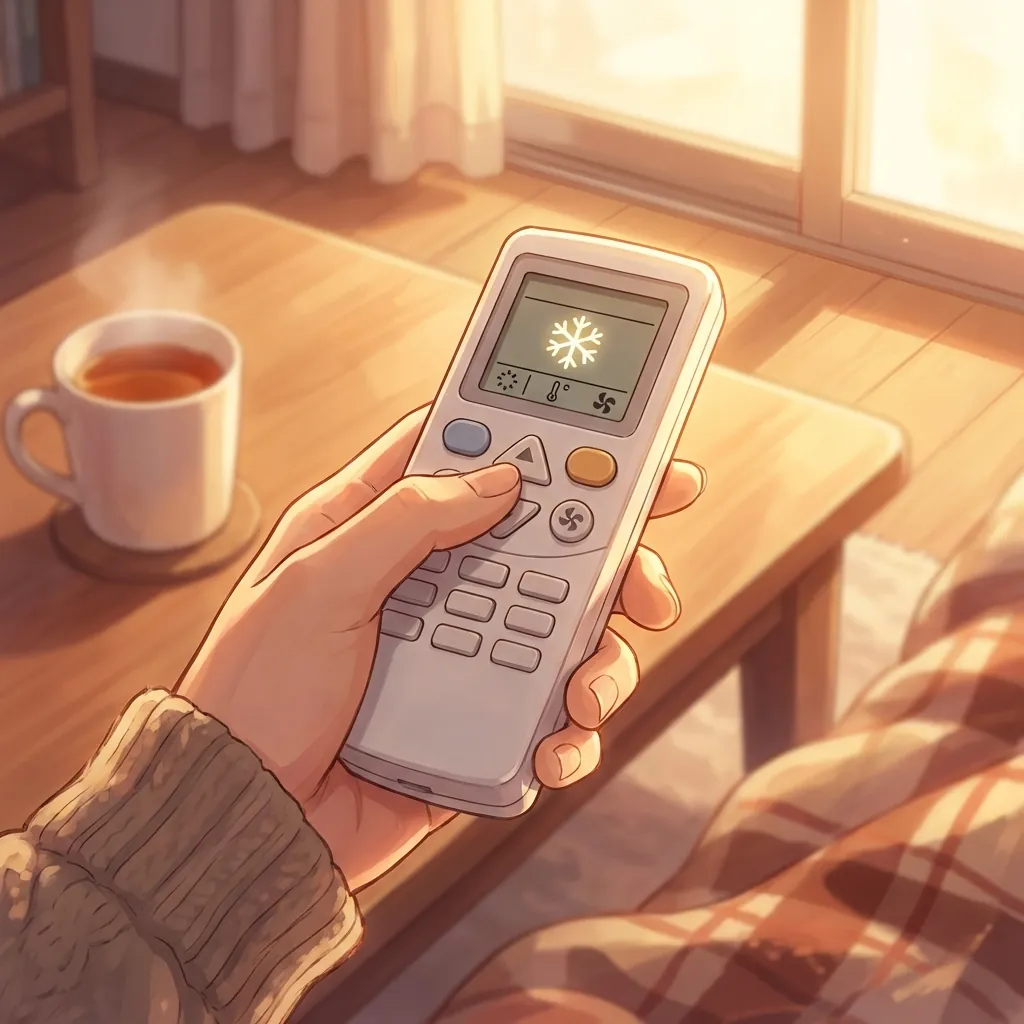
You have just dragged your luggage up six flights of stairs to your new apartment in Shanghai. It is August. The humidity is 95%. You grab the AC remote, desperate for relief, and freeze. There are no snowflakes or sun icons. Just a wall of Chinese characters.
This is a classic expat rite of passage. While you might be looking for a quick chinese air conditioner remote symbols english chart, it helps to understand the logic behind the buttons so you don't accidentally set a timer that shuts off your cooling at 3 AM.
Here is your survival guide to mastering the Chinese air conditioner remote.
The Master Key: Mode (模式)
The most important button on the remote is usually labeled 模式 (mó shì). This cycles through the operating modes. If you press this blindly, you might end up in 'Fan Only' mode while sweating through your sheets.
On the display screen, you will typically see a small arrow moving next to these characters:
| Simplified | Traditional | Pinyin | Meaning | Note |
|---|---|---|---|---|
| 制冷 | 制冷 | zhì lěng | Cooling | The one you want in summer. Look for the snowflake icon if available. |
| 制热 | 制熱 | zhì rè | Heating | Essential for winter. Often paired with a sun icon. |
| 除湿 | 除濕 | chú shī | Dehumidify | Removes humidity. Often feels colder than standard cooling. |
| 送风 | 送風 | sòng fēng | Fan Only | Just blows air. No cooling or heating. |
| 自动 | 自動 | zì dòng | Automatic | The AC guesses what you want. Usually disappoints. |
A Note on Dehumidify vs. Cooling
Many people confuse 制冷 (Cooling) with Dehumidify (除湿). In Southern China, the 'wet cold' of winter or the 'sauna' of summer makes the Dehumidify mode incredibly useful. It runs the compressor at a lower speed to pull moisture out of the air without freezing the room instantly.
Example: “Save electricity by using the dry mode.”
用除湿模式更省电。(Yòng chúshī móshì gèng shěngdiàn.)
Controlling the Wind: Speed and Direction
Once you have the temperature set (usually with simple Up/Down arrows), you need to manage the airflow. Direct cold air hitting your face all night is a recipe for a summer cold.
Fan Speed (风速)
The button labeled 风速 (fēng sù) controls how hard the air blows.
- 高 (Gāo): High
- 中 (Zhōng): Medium
- 低 (Dī): Low
- 自动 (Zìdòng): Auto (Adjusts based on room temp)
Swing (扫风)
This is often the most confusing part because there are two types of movement. The button is usually called 扫风 (sǎo fēng).
- 上下扫风 (Shàngxià sǎofēng): Vertical swing (Up and Down).
- 左右扫风 (Zuǒyòu sǎofēng): Horizontal swing (Left and Right).
If you want the blades to stay still, press the button once to start the swing, wait for it to reach the position you want, and press it again to stop (lock) it.
The "Trap" Buttons
Modern Chinese remotes, especially from brands like Gree (格力) or Midea (美的), come with feature buttons that can ruin your night if pressed accidentally.
1. Auxiliary Heat (辅热)
This button, labeled 辅热 (fǔ rè), turns on an electric heating element inside the unit. It warms the room faster in winter but consumes massive amounts of electricity and makes the air bone-dry. If your throat hurts in the morning during winter, check if this is on.
2. Strong / Turbo (强劲)
The 强劲 (qiáng jìng) button ignores your settings and blasts the AC at maximum power. Good for the first 5 minutes when you walk in; bad for sleeping.
3. Light (灯光)
If the AC unit has a bright LED display showing the temperature that illuminates your entire bedroom at night, look for the 灯光 (dēng guāng) or 显示 (xiǎn shì) button to turn it off.
Troubleshooting: It's Not Working
If you are aiming the remote and nothing is happening, or the AC is behaving strangely, check these three things before calling your landlord (or trying to navigate the tech headache of property management apps).
- Is it locked? Look for a tiny padlock icon on the screen. If you see one, you likely pressed the two temperature buttons simultaneously (a common child-lock feature). Press and hold them together again to disengage the lock.
- Is it on Auto? As mentioned, Automatic (自动) mode often defaults to 26°C. If you want it colder, you must switch to Cooling mode.
- Is it actually a heater? If you are in Southern China, some cheaper units are "Cooling Only" (单冷机: dān lěng jī). Pressing the 'Heat' button on a universal remote won't magically add a heating coil to the hardware.
Quick Reference Cheat Sheet
Save this list on your phone for when you visit a friend's house or a hotel.
| Chinese | Pinyin | English |
|---|---|---|
| 开/关 | kāi / guān | On / Off |
| 模式 | mó shì | Mode |
| 制冷 | zhì lěng | Cooling |
| 制热 | zhì rè | Heating |
| 温度 | wēn dù | Temperature |
| 定时 | dìng shí | Timer |
| 睡眠 | shuì mián | Sleep Mode |
Getting comfortable in your apartment is step one of living in China. Step two is learning how to get cold water to go with your cold room. Stay cool.