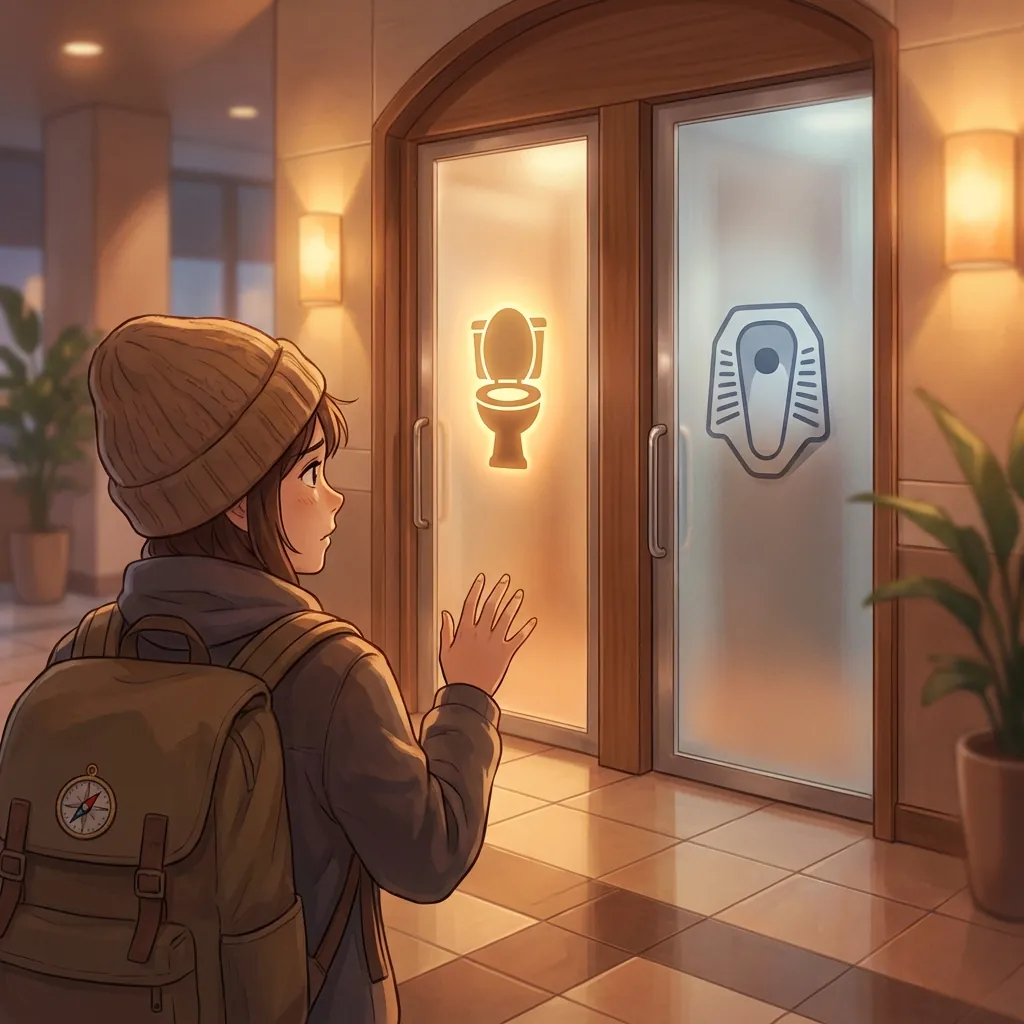
You are in a busy shopping mall in Shanghai. You’ve enjoyed your bubble tea a little too much. You are about to learn why knowing how to ask for a western style sitting toilet in China is essential. You find the restroom, rush to a stall, and open the door.
Panic sets in. It’s a porcelain hole in the ground.
For many travelers, the "Asian Squat" isn't just uncomfortable. It is physically impossible due to flexibility or knee issues. If you are one of those people, you need a strategy. You need to be prepared before it becomes an emergency.
Here is your survival guide to finding the "throne" in the Middle Kingdom.
The Vocabulary: Squat vs. Sit
First, let’s clear up the confusion. If you just ask for the toilet (厕所 cèsuǒ) or the more polite restroom (洗手间 xǐshǒujiān), you will be pointed to the nearest facility. That facility might be 100% squat toilets.
You need to be specific. In Chinese, the distinction comes down to the verb describing the action: "Squat" vs. "Sit."
| Simplified | Traditional | Pinyin | Meaning | Note |
|---|---|---|---|---|
| 坐便 | 坐便 | zuòbiàn | Sitting toilet (Western style) | The word you need. |
| 蹲便 | 蹲便 | dūnbiàn | Squat toilet | The one you might want to avoid. |
| 马桶 | 馬桶 | mǎtǒng | Toilet bowl / Commode | Often implies a sitting toilet in casual speech. |
How to Ask for It
When you are at a restaurant or a public venue, don't just ask where the bathroom is. Ask specifically if they have a sitting one. This uses the grammar structure of possession which you can review in our guide on having vs not having.
Here is the magic sentence:
请问,这里有坐便吗?Pinyin: Qǐngwèn, zhèlǐ yǒu zuòbiàn ma?
Meaning: Excuse me, is there a sitting toilet here?
If you want to be extra polite, which is always a good idea when asking strangers for help with bodily functions, start with a softener.
- You: 不好意思,请问有坐便吗?
- (Excuse me, do you have a sitting toilet?)
- Staff: 有的,在里面。
- (Yes, it's inside.)
Check out duibuqi vs buhaoyisi to understand why we use bùhǎoyìsi here instead of "sorry."
Strategic Locations: Where to Look First
Not all restrooms are created equal. If you are desperate, do not waste time running into a local park or a small hole-in-the-wall noodle shop. Use this "heatmap" to increase your success rate.
1. The "Golden Arches" of Relief
Western fast-food chains are the unsung heroes of Chinese tourism. McDonald's, KFC, and Starbucks almost exclusively use sitting toilets. They are cleaner than public street toilets and usually stocked with paper (though you should always carry your own).
2. High-End Malls (The Upper Floors)
In modern Chinese malls, the first floor is busy. Go up to the 3rd or 4th floor where the expensive brands are. The restrooms there are often pristine, and you will see signage on the stall doors distinguishing between 蹲 (Squat) and 坐 (Sit).
3. The Accessible Restroom Trick
If every stall is a squat toilet, look for the accessible restroom sign (the wheelchair symbol).
无障碍卫生间Pinyin: Wúzhàng'ài wèishēngjiān
Meaning: Accessible Restroom
These are always Western-style sitting toilets. In many malls, this is a separate single-room facility. It is perfectly acceptable to use this if you physically cannot use a squat toilet, as inability to squat is a valid accessibility need.
Decoding the Stall Door
You rush into a restroom and see ten doors. You don't want to knock on all of them or peek under the gap (which is often non-existent in China).
Look at the lock or the handle. Modern stalls often have a small icon:
- Figure sitting on a chair shape: 坐便 (Western)
- Figure in a Z-shape: 蹲便 (Squat)
Occasionally, you might see the Japanese influence in terminology if you are in a very high-end Japanese department store in Shanghai, but generally, the icons are universal.
Summary
The quest for a Western toilet doesn't have to be a horror story.
- Memorize the word Zuòbiàn (Sit-convenience).
- Ask: "Yǒu zuòbiàn ma?"
- Head for Starbucks or Malls if in doubt.
Nature calls, but now you can answer it comfortably. Good luck on your Western Toilet Quest!