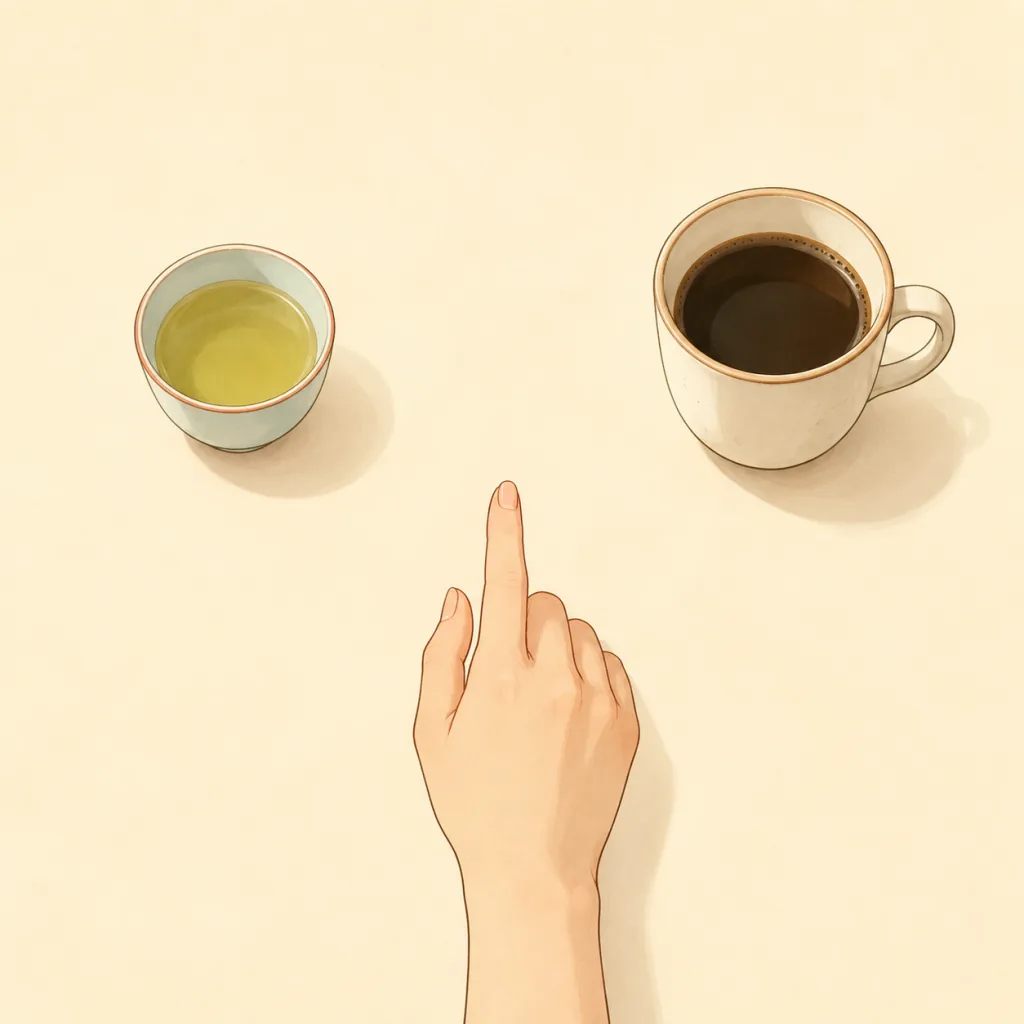
Imagine you are at a dinner party. The host offers you a plate of stinky tofu.
If you say 我不吃 (Wǒ bù chī), the host might look offended. You just said, "I don't eat this (it's gross)" or "I refuse to eat this."
If you say 我没吃 (Wǒ méi chī), the host might look confused. You just said, "I haven't eaten (yet)."
In English, "No" is just "No." In Chinese, "No" tells a story. It tells us if you represent a Subjective Will or an Objective Fact.
If you are treating 不 (bù) and 没有 (méiyǒu) as interchangeable, you are likely saying things you don't mean. Let's fix that.
The Golden Rule: Subjective vs. Objective
Forget "Past vs. Present" for a second. That is the simplified rule that causes mistakes later. I want you to learn the feeling of the words.
不 (Bù): The Subjective Refusal
Think of 不 as your personality. It represents your will, your habits, and your opinions. It is subjective.
- "I don't want to."
- "I don't (habitually) do that."
- "I am not."
没有 (Méiyǒu): The Objective Report
Think of 没有 as a history book. It represents facts, occurrences, and possession. It is objective.
- "It didn't happen."
- "I don't have it."
- "I haven't done it (yet)."
This distinction is crucial when you are learning how to say yes (and no) in Chinese correctly.
The Timeline (And The Trap)
Okay, now we can talk about time. But keep the "Subjective vs. Objective" rule in the back of your head, because it explains the exceptions.
(If you are struggling with where to put time words in a sentence, review my guide on Chinese sentence structure first).
1. Present & Future: Use 不
If you are talking about now or the future, you are almost always using 不.
我明天不去。 (Wǒ míngtiān bù qù.)
I won't go tomorrow. (My intention).
2. Past Actions: Use 没有
If an action didn't happen in the past, use 没有.
我昨天没有去。 (Wǒ zuótiān méiyǒu qù.)
I didn't go yesterday. (Fact).
3. The Trap: Past Adjectives Use 不!
This is where 90% of beginners fail. They think "Past = Meiyou." WRONG.
If you are describing a state (an adjective) in the past, you still use 不. Why? Because a state isn't an "action" that completed or failed. It’s a description.
- Incorrect: 昨天没冷。 (Zuótiān méi lěng.)
- Correct: 昨天不冷。 (Zuótiān bù lěng.)
- Translation: Yesterday was not cold.
The "Attitude" Difference: A Case Study
Let's go back to the verb 吃 (chī - to eat). Using the wrong negation here completely changes your vibe.
The Habitual "No"
我不吃肉。 (Wǒ bù chī ròu.)
I don't eat meat.
Context: I am a vegetarian. This is my principle.
The Stubborn "No"
我不吃! (Wǒ bù chī!)
I won't eat!
Context: You are angry or refusing the food presented to you.
The Factual "No"
我没吃早饭。 (Wǒ méi chī zǎofàn.)
I didn't eat breakfast.
Context: Just stating a fact. I might be hungry now.
The Exceptions: "Know", "Be", and "Have"
Some verbs are stubborn. They refuse to follow standard time rules.
1. 是 (Shì - To be) & 知道 (Zhīdào - To know)
These almost ALWAYS take 不, even in the past. Why? Because "being" and "knowing" are viewed as continuous states, not one-time actions.
我以前不知道。 (Wǒ yǐqián bù zhīdào.)
I didn't know before. (NOT mei zhidao)
This also applies to modal verbs like 会 (huì) or 能 (néng). If you want to dive deeper into those, check out Hui vs Neng vs Keyi.
2. 有 (Yǒu - To have)
This verb is married to 没. They are inseparable. You can NEVER say "Bu you."
我没有钱。 (Wǒ méiyǒu qián.)
I don't have money.
The "Le" Allergy
Here is a grammar rule that is as strict as gravity: 没有 eats 了.
You often learn that 了 (le) marks the past tense (technically completion). So you logically think: "I didn't buy it" should be Wo meiyou mai le.
Stop.
了 indicates an action is complete. 没有 indicates an action did not happen. These two concepts are enemies. If it didn't happen, it can't be complete.
- Incorrect: 我没有买了。
- Correct: 我没有买。 (Wǒ méiyǒu mǎi.)
Quick Reference Vocabulary
| Simplified | Traditional | Pinyin | Meaning | Negation Partner |
|---|---|---|---|---|
| 不 | 不 | bù | Not / No | Present, Future, Habits, Adjectives, 是 |
| 没 | 没 | méi | Not (have) | Past Actions, 有 |
| 有 | 有 | yǒu | To have | Always 没 |
| 是 | 是 | shì | To be | Always 不 |
| 知道 | 知道 | zhīdào | To know | Always 不 |
Quick Takeaways
- Check the Vibe: Are you refusing/stating an opinion? Use 不. Are you reporting a fact? Use 没有.
- Check the Verb: Is it 有 (to have)? Always use 没. Is it 是 (to be)? Always use 不.
- Check the Past: Was it an action? Use 没有. Was it an adjective/feeling? Use 不 (e.g., 不开心 - wasn't happy).
- Kill the Le: Never put 没有 and 了 in the same room.