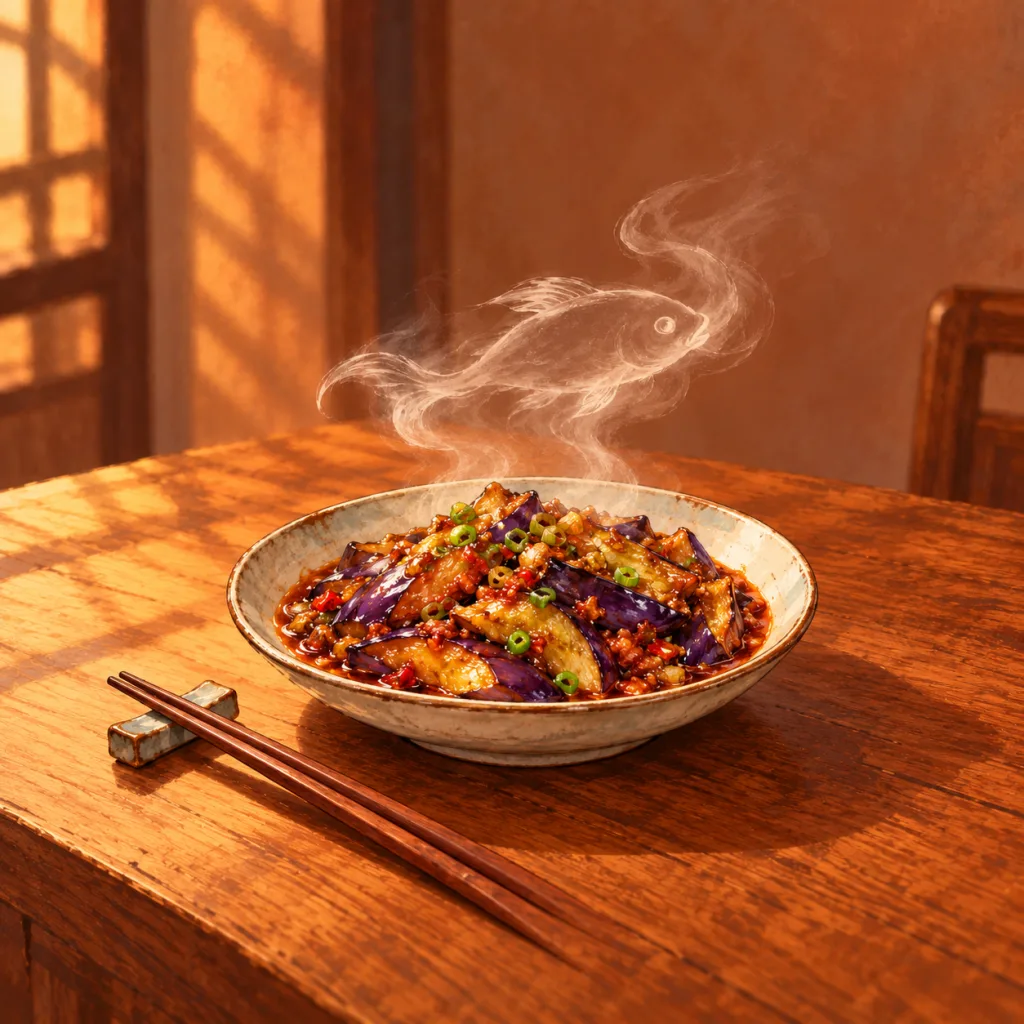
To read a Chinese menu, find the main ingredient, look for cooking or flavor words, then check whether the name is descriptive or figurative. You can understand a useful part of a dish name without recognizing every character. What you cannot do is treat that name as a complete ingredient list.
Take 鱼香茄子 (yú xiāng qié zi). The last two characters tell you the main ingredient: eggplant. The first two literally suggest “fish fragrance,” but in this Sichuan name they describe a seasoning style. Translating every character separately can give you the wrong picture of dinner.
Start with the section, then the ingredient
A heading gives you a first clue: 主食 (zhǔ shí) means staples, 热菜 (rè cài) hot dishes, and 凉菜 (liáng cài) cold dishes. Not every menu uses these headings, but noticing one narrows your search.
Within a dish name, look for an ingredient you recognize:
| Chinese | Pinyin | Starting clue |
|---|---|---|
| 鸡肉 | jī ròu | Chicken; some names use just 鸡 |
| 牛肉 | niú ròu | Beef |
| 鱼 / 虾 | yú / xiā | Fish / shrimp |
| 豆腐 | dòu fu | Tofu |
| 茄子 | qié zi | Eggplant |
| 蛋 | dàn | Egg |
An ingredient can appear in the middle or at the end. Do not memorize a rigid order. Also, 肉 (ròu) means meat: in familiar names such as 青椒肉丝, unqualified “meat” often means pork, but that is a useful expectation rather than a promise.
Read the preparation and flavor clues
These few words help you imagine what arrives at the table:
| Word | Pinyin | Usual menu meaning |
|---|---|---|
| 炒 | chǎo | Stir-fried |
| 蒸 | zhēng | Steamed |
| 煎 | jiān | Pan-fried |
| 烤 | kǎo | Roasted or grilled |
| 凉拌 | liáng bàn | Served cool and dressed or tossed |
| 红烧 | hóng shāo | Red-braised; commonly a savory, soy-based preparation |
| 糖醋 | táng cù | Sweet and sour |
| 酸辣 | suān là | Sour and spicy |
Use these as clues to a preparation, not an exact recipe. 红烧 does not establish a chili level, and “steamed” does not tell you what is in the sauce. You can look up 红烧 or 凉拌 as whole expressions instead of translating each character.
Three names you can take apart
蒜蓉西兰花 — suàn róng xī lán huā. 蒜蓉 is minced or crushed garlic; 西兰花 is broccoli. You have identified garlic broccoli, but the name has not told you which stock, oil, or seasoning the kitchen uses.
青椒肉丝 — qīng jiāo ròu sī. Green pepper + meat + thin strips. 丝 (sī) describes the cut. Other useful cut words are 片 (piàn, slices) and 丁 (dīng, small cubes). Ask what meat it is if pork is a concern.
酸辣土豆丝 — suān là tǔ dòu sī. Sour-and-spicy + potato + thin strips. This is a potato dish, not noodles. Here the flavor and cut words tell you something that “potatoes” alone would miss.
When the name stops being a recipe
Some names contain a flavor label, an image, or the name of an established dish. Look up the whole expression when the parts stop making sense.
鱼香茄子 (yú xiāng qié zi): “fish-fragrant” eggplant
鱼香 is a Sichuan seasoning style commonly combining spicy, sweet, sour, and savory flavors. It need not contain fish. But “need not” matters: The Woks of Life’s own recipe includes optional fish sauce, as well as pork, stock, and oyster sauce. A flavor name cannot settle a seafood or vegetarian question.
蚂蚁上树 (mǎ yǐ shàng shù): “ants climbing a tree”
The familiar dish is glass noodles with minced meat, commonly pork. The name evokes little pieces of meat among the noodles, not insects. Judy’s recipe uses ground pork and allows chicken as an alternative. Ask about the kitchen’s version rather than ordering from the literal image.
三杯鸡 (sān bēi jī): three-cup chicken
鸡 gives you the chicken; 三杯 names a preparation rather than three cups served beside it. In a Taiwanese version, the characteristic seasonings include sesame oil, soy sauce, and rice wine, often with basil, as in this Taiwan producer’s recipe. The name does not specify the proportions used by a restaurant.
Ask for the missing piece
These are constructed teaching examples you can use while pointing at a menu:
请问,这道菜主要是什么?Qǐng wèn, zhè dào cài zhǔ yào shì shén me?
Excuse me, what is the main ingredient in this dish?
是鸡肉还是猪肉?Shì jī ròu hái shì zhū ròu?
Is it chicken or pork?
里面有鱼或海鲜吗?Lǐ miàn yǒu yú huò hǎi xiān ma?
Does it contain fish or seafood?
If you need to avoid an ingredient, name it explicitly and ask about sauces and stock too. A photo or a translation cannot establish the full recipe. For more detailed dietary questions, use the vegetarian ordering guide; for getting someone’s attention, see how to call a waiter politely.
Mainland and Taiwan menus: recognize both names
In mainland usage, 土豆 (tǔ dòu) commonly means potato; Taiwan menus commonly use 马铃薯 (mǎ líng shǔ). For tomato, learn both 西红柿 (xī hóng shì) and 番茄 (fān qié); 番茄 is common in Taiwan and also used in the mainland. These are vocabulary differences, not merely simplified-versus-traditional spelling.
On your phone, crop one menu line, check the recognized Chinese against the original, and look up the complete name. Identify the ingredient and preparation before trusting the English translation. Save a dish you actually ordered with a short note about what arrived: that connects the words to a meal you can remember.