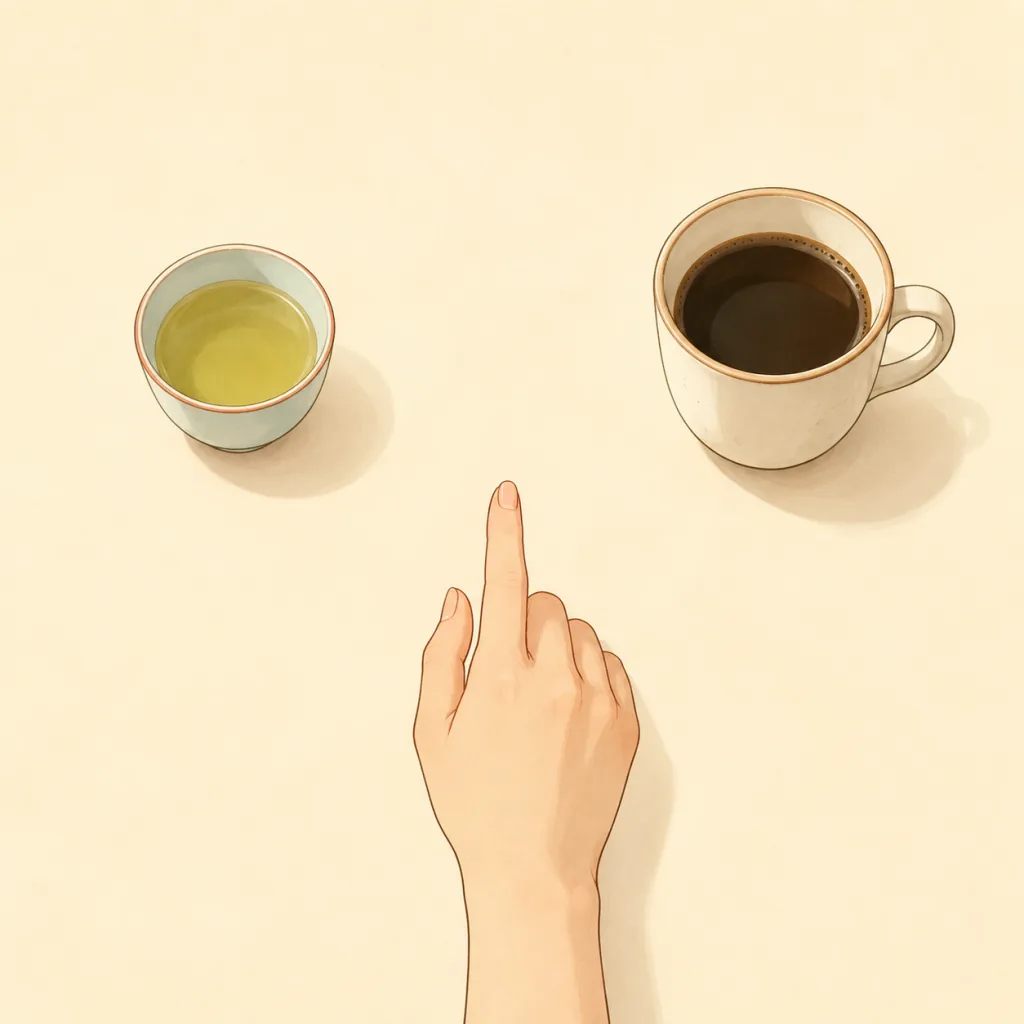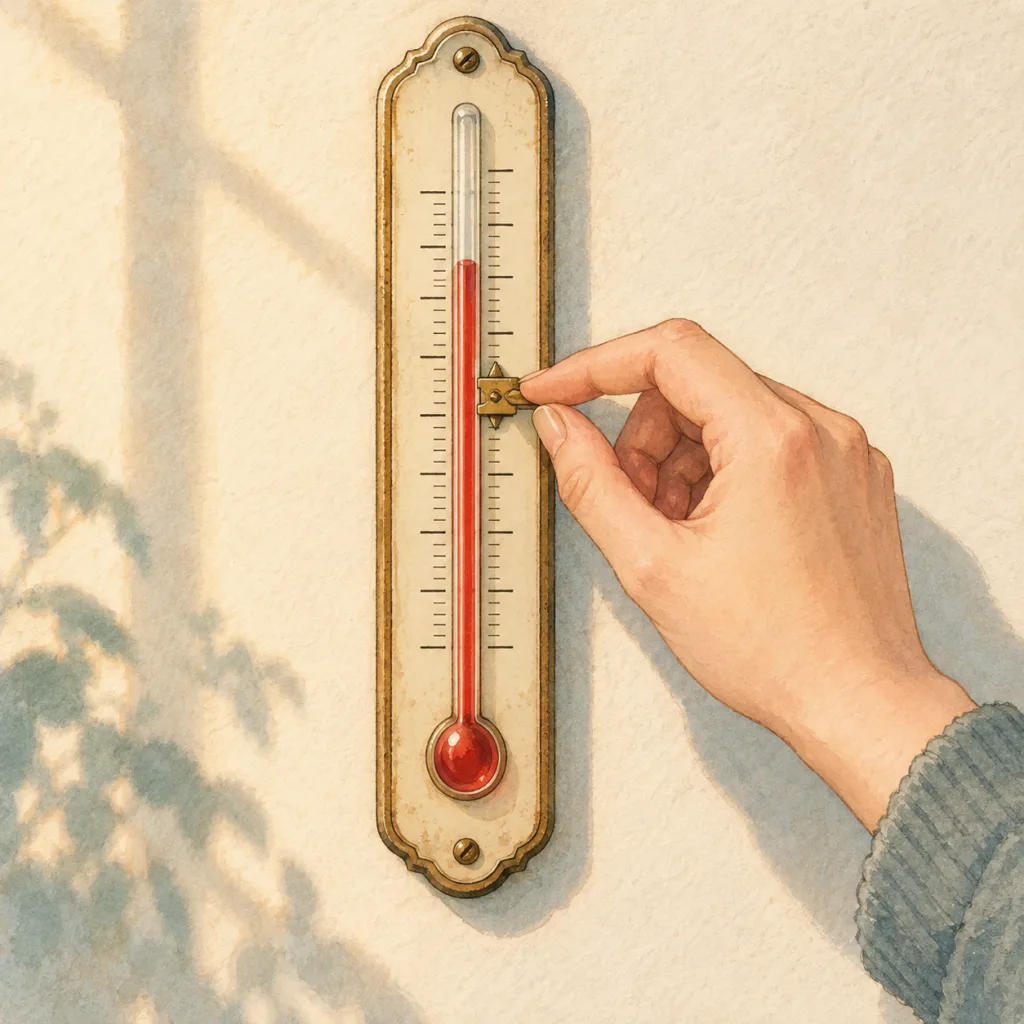
Both 一点儿 (yìdiǎnr) and 有点儿 (yǒudiǎnr) can mean “a little,” but they usually occupy different places. 有点儿 goes before a quality to describe the current state; 一点儿 follows a quality or action to indicate a small difference or adjustment.
这杯茶有点儿热。Zhè bēi chá yǒudiǎnr rè.
This tea is a bit hot.
让它凉一点儿吧。Ràng tā liáng yìdiǎnr ba.
Let it cool down a little.
The first sentence notices a state; the second asks for a small change. That pair is a more useful memory aid than translating both expressions as “a little.” Tokyo University of Foreign Studies’ grammar module likewise distinguishes the pre-adjective 有点儿 from the post-adjective 一点儿.
A position-first rule
| What you mean | Pattern | Example |
|---|---|---|
| “It is somewhat X.” | 有点儿 + adjective | 房间有点儿暗。 — The room is a little dark. |
| “Make it a little more/less X.” | adjective + 一点儿 | 把灯调亮一点儿。 — Turn the light up a little. |
| “A small amount of X.” | 一点儿 + noun | 我想喝一点儿水。 — I’d like a little water. |
The third row matters: 一点儿 is not always sentence-final. With a noun, it measures a small quantity. The mistake is treating bare 一点儿 as if it could replace 有点儿 before an adjective.
有点儿 (yǒudiǎnr): describe a state, often with a reservation
Put 有点儿 before an adjective or a suitable feeling or change verb:
这件外套有点儿贵。Zhè jiàn wàitào yǒudiǎnr guì.
This coat is a bit expensive.
我有点儿担心。Wǒ yǒudiǎnr dānxīn.
I’m a little worried.
It often makes an unwelcome judgment less blunt: “a bit expensive” is gentler than simply “expensive.” But “always negative” is too rigid. In a friendly context, 我有点儿期待。 (Wǒ yǒudiǎnr qīdài) can mean “I’m kind of looking forward to it.” Research on the expression distinguishes its low-degree meaning from its use in softening the speaker’s stance; the tone depends on what is being described and why (Jin Congcong, Zhengzhou University).
有一点儿 (yǒu yìdiǎnr) can perform the same pre-adjective job: 今天有一点儿冷。 means “It’s a little cold today.” The 一 is inside the longer expression; that does not make bare 一点儿冷 the usual way to say it.
一点儿 (yìdiǎnr): ask for or compare a small difference
After an adjective, 一点儿 marks a small movement on a scale. You will hear it in requests and comparisons:
请说慢一点儿。Qǐng shuō màn yìdiǎnr.
Please speak a little more slowly.
这双鞋比那双便宜一点儿。Zhè shuāng xié bǐ nà shuāng piányi yìdiǎnr.
This pair of shoes is a little cheaper than that one.
There need not be an explicit 比 (bǐ, “than”): 这个大一点儿。 (Zhège dà yìdiǎnr) can mean “This one is a little bigger” when the other option is clear. A Princeton University Press grammar excerpt describes the same post-adjective 一点儿 as marking a small difference in comparisons.
With an action, 一点儿 can also mean “a little more of it”: 再等一点儿。 (Zài děng yìdiǎnr) means “Wait a little longer.” And before a noun it can mean a small amount, as in 一点儿时间 (yìdiǎnr shíjiān, “a little time”). These are related quantity uses, not a reason to move it in front of every adjective.
Compare the same situation
Imagine a room with the air conditioner running:
这里有点儿冷。Zhèlǐ yǒudiǎnr lěng.
It’s a bit cold in here. (observation)
把空调调高一点儿,可以吗?Bǎ kōngtiáo tiáo gāo yìdiǎnr, kěyǐ ma?
Could you turn the air conditioner temperature up a little? (requested adjustment)
You can use both in one conversation because they do different jobs. If you only remember “有点儿 is negative,” you may miss the more dependable clue: its position before the quality. If you only remember “一点儿 means a small amount,” you may miss the change implied by position after the quality.
Three common repairs
- To say “This is a bit expensive,” use 这个有点儿贵。 (Zhège yǒudiǎnr guì), not bare 这个一点儿贵。
- To ask “A little cheaper, please,” use 便宜一点儿。 (Piányi yìdiǎnr), not 一点儿便宜。
- To say “I speak a little Chinese,” use 我会说一点儿中文。 (Wǒ huì shuō yìdiǎnr Zhōngwén): here it measures the amount of Chinese you speak. Compare the separate 会, 能, and 可以 guide if those three “can” words are also causing trouble.
You may see 有点 and 一点 without 儿, especially in speech or writing that uses less érhuà. The core placement rule stays useful. Taiwan’s Ministry of Education lists both 有點兒 and 有點; do not mistake the suffix for a change in the basic grammar.